Tell Us About Your Driveway
Send us the basics on your property and what you are after, a new paver driveway, a replacement for cracked blacktop, or a tired driveway redone, and we’ll set up a time to come take a look and get you an estimate.
What's Included in a Paver Driveway
A driveway is one of the first things anyone sees pulling up to a home, and it is one of the few parts of a property you use every single day, so it has to look right and hold up. The catch is that almost all of the work that decides whether a driveway lasts is under the surface, in the base, where you never see it, which is exactly why so many driveways fail early.
We build the base right, set the pavers tight on top of it, and finish the edges and the fall so the driveway holds its shape, sheds water, and reads sharp for decades instead of cracking, sinking, and fading in a few seasons. Down here the salt, the sun, and the freeze and thaw are hard on a driveway, and a paver driveway built on a proper base takes those conditions where a slab of blacktop slowly loses to them. A paver driveway pairs with Belgian block edging for the borders and apron, and when the ground needs to be reshaped first we handle the grading before the base goes in.
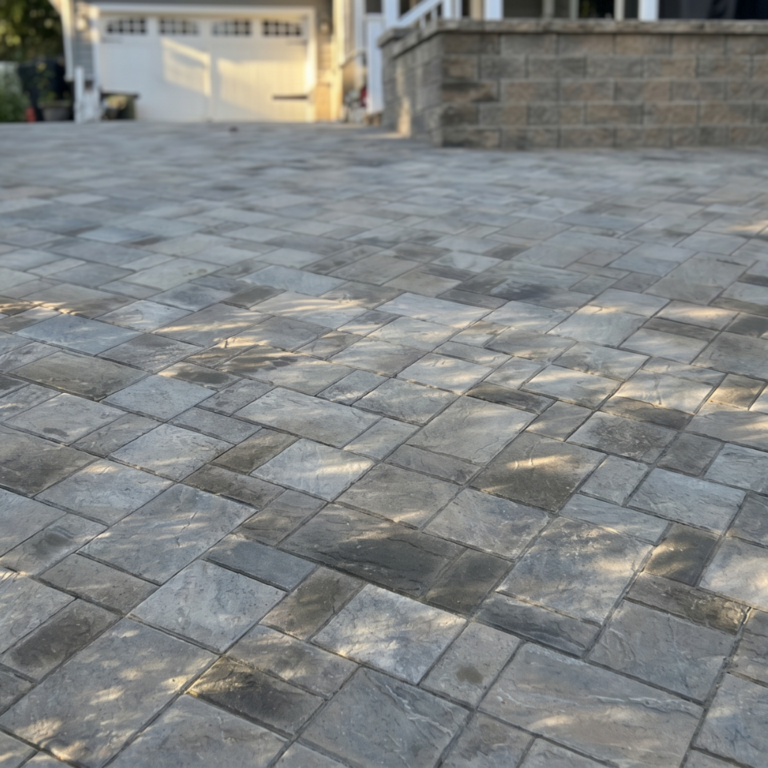
What a Paver Driveway Covers
Digging Out and Building the Base
Almost everything that decides whether a driveway lasts happens in the base, under the surface, before a single paver goes down.
We dig out to the depth the driveway needs, then build the base up in compacted layers of the right material, so it carries the weight of vehicles without settling, rutting, or pushing up in the freeze and thaw.
On the soft, sandy ground down here, that base is what keeps a driveway from sinking into low spots and waves a season or two in, which is how most cut-rate driveways fail. We compact each layer as we build it, not just the top, so the whole base is solid all the way down.
Get the base right and the surface holds, get it wrong and nothing you lay on top of it will save it.
Paver Driveway Installation
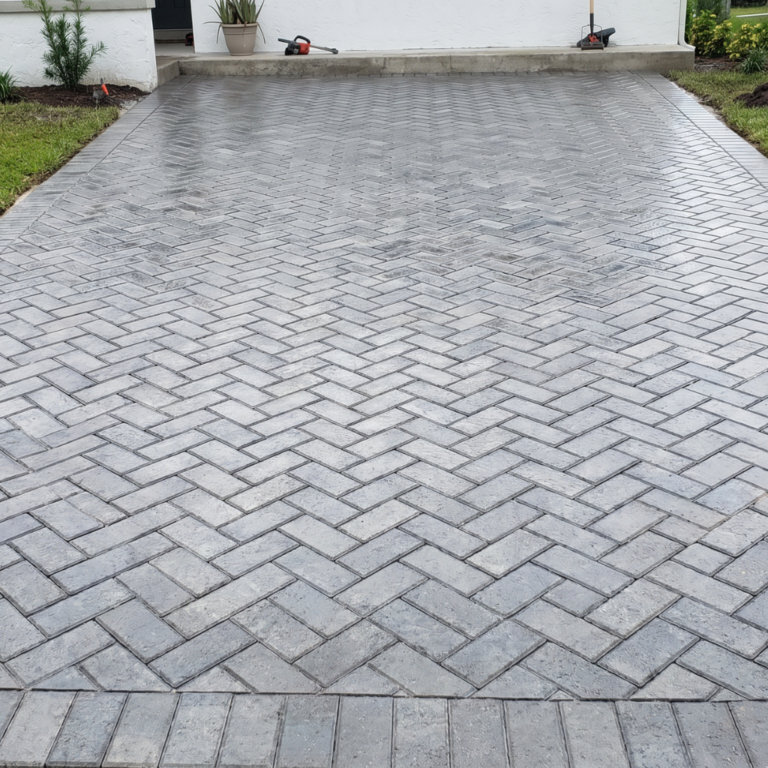
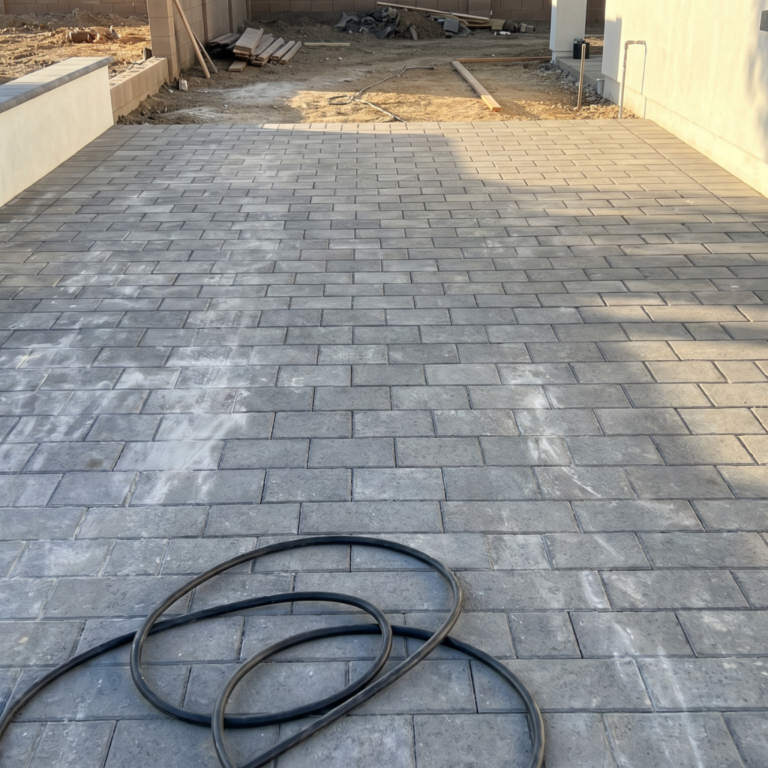
With the base set, we lay the pavers tight and to a pattern that locks together and carries the load across the whole field instead of through any one stone.
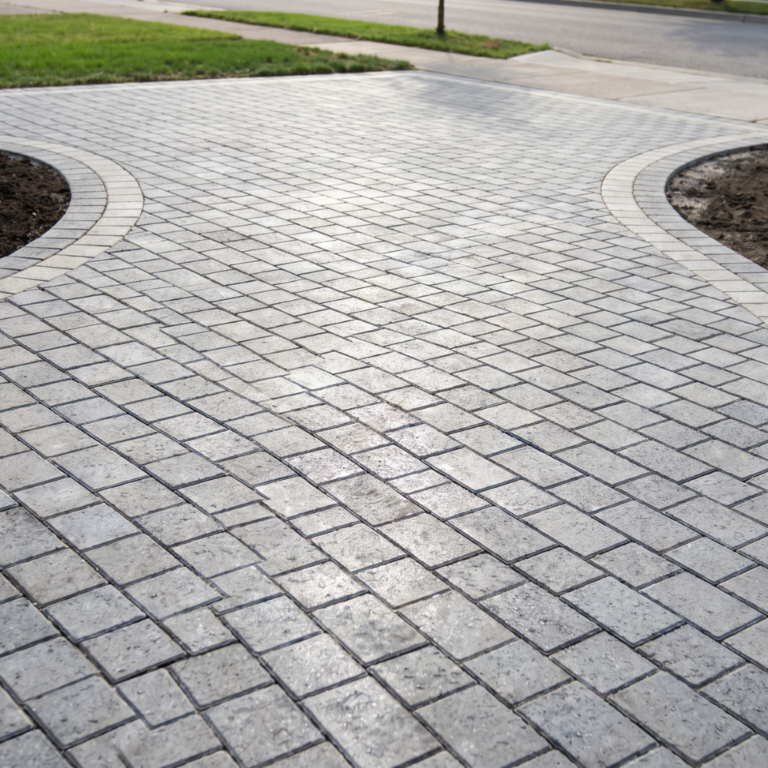
The pattern and the cuts get worked around the shape of your driveway, the curves, the apron at the street, and the borders, so the lines read clean and intentional rather than patched together. We set the pavers to the fall we planned, so the finished surface drains instead of holding puddles, and we lock the joints with the right jointing so the field stays tight underfoot and under tires.
The result is a surface that reads as one driveway, not a grid of loose blocks, and that you can use the day it is finished.
Edging and Drainage
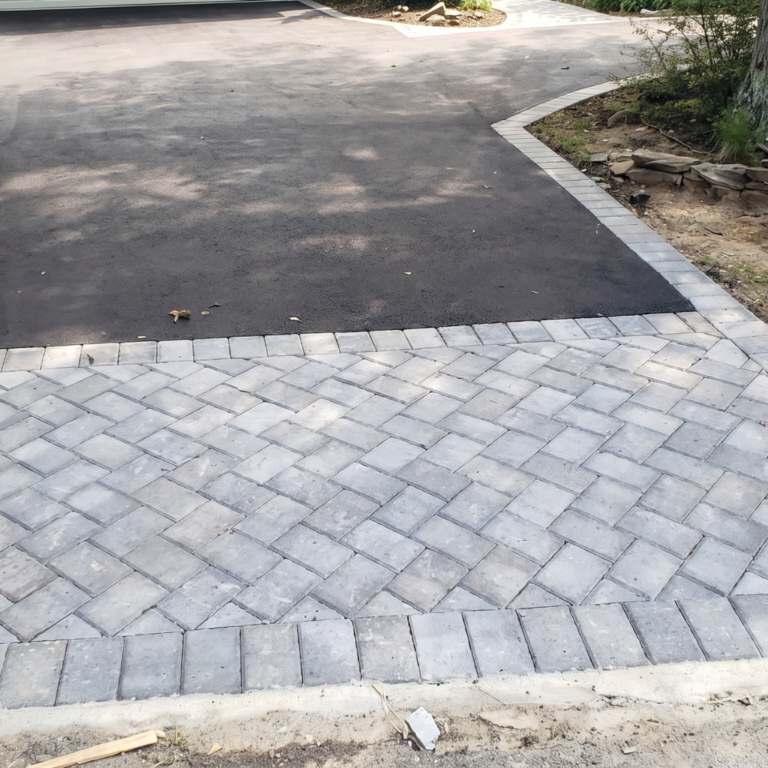
A paver field is only as stable as what holds it in, so the edges get a restraint that keeps the pavers from spreading and creeping out of line under years of traffic. We set clean borders, often in Belgian block, that hold the field tight and give the driveway a finished edge instead of a ragged one that crumbles into the lawn or the beds.
The whole driveway is built to a fall that carries water off the surface and away from the house, so it sheds instead of ponding and freezing. That drainage is part of why a paver driveway holds up here, where standing water and freeze and thaw are what break a surface apart.
Pavers Over Blacktop
Blacktop is cheaper going in and it shows down here, softening and getting tacky in the full summer sun, fading from black to grey, and cracking as the ground moves under it until you are patching it every few years.
A paver driveway does not soften, it does not fade the same way, and when the ground shifts it flexes instead of cracking into a spider web you cannot fix. If a section ever does settle or a paver gets damaged, individual pavers come up and go back down with no patch or seam to show for it, where blacktop gets an obvious dark patch every time.
It costs more up front and it earns that back in a driveway that still looks right in fifteen years instead of one you are resealing, patching, and eventually tearing out.
What a Good Driveway Does for a Home
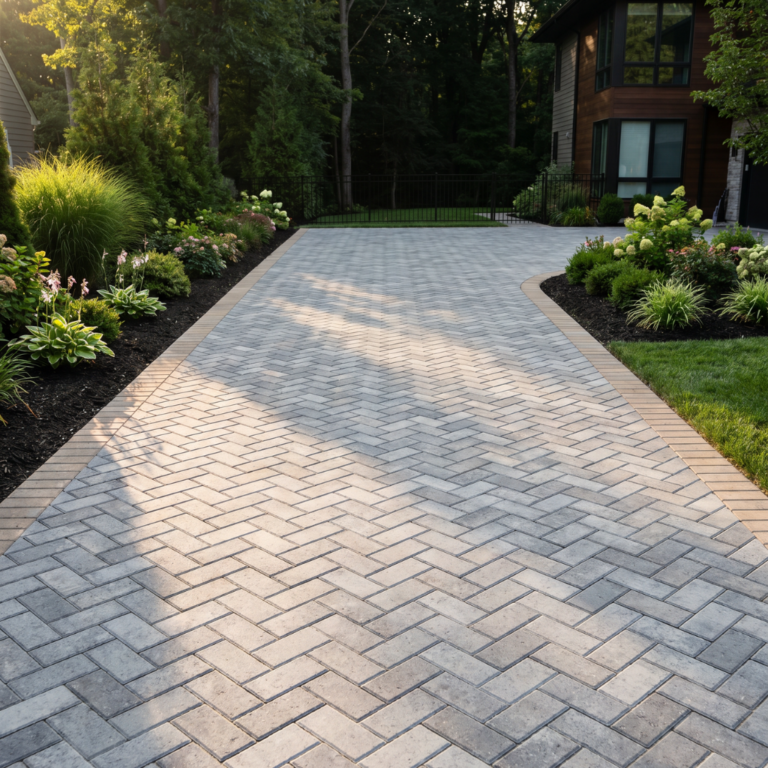
A driveway is a big piece of the front of a home, the first surface you see pulling up and a large part of whether a property reads as cared for or worn out.
It is also one of the most used parts of the place, under tires and underfoot every day, so when it cracks, sinks, or fades it drags down the whole look and turns into a constant repair.
A paver driveway built on a real base does the opposite, holding its shape and its look for decades and adding real value to the home, which shows in person and in every listing photo if you ever sell. Down here, where the salt, the sun, and the freeze and thaw wear hard on a surface, the driveways that still look right years later are the ones built for the conditions on a base that holds, not poured cheap and patched ever after.