Tell Us About Your Flower Beds
Send us the basics on your property, how many beds, what shape they are in, and whether you want a one-time mulch or it kept up each season, and we’ll set up a time to come take a look and get you an estimate.
What's Included in Our Mulch Installation
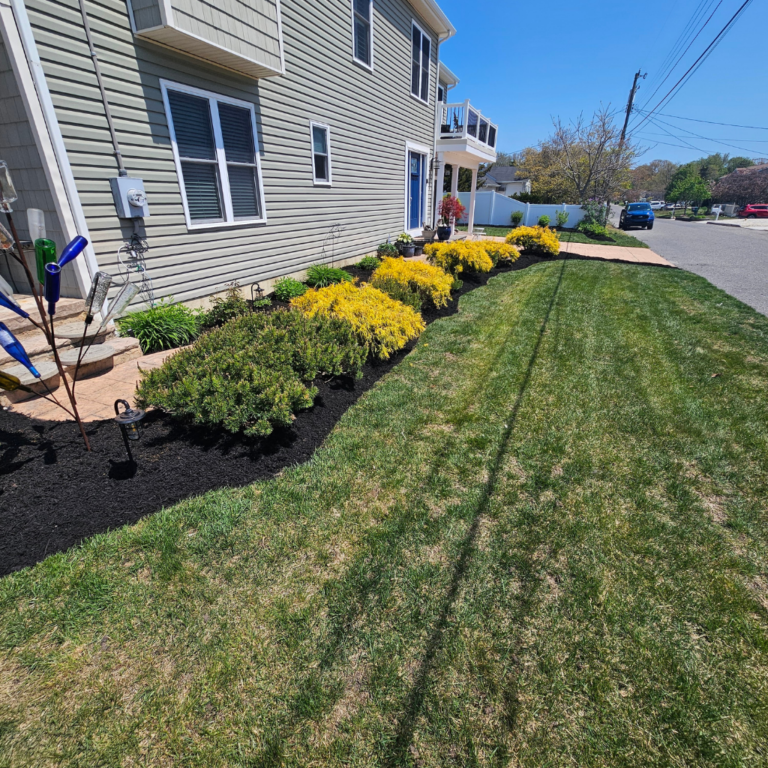
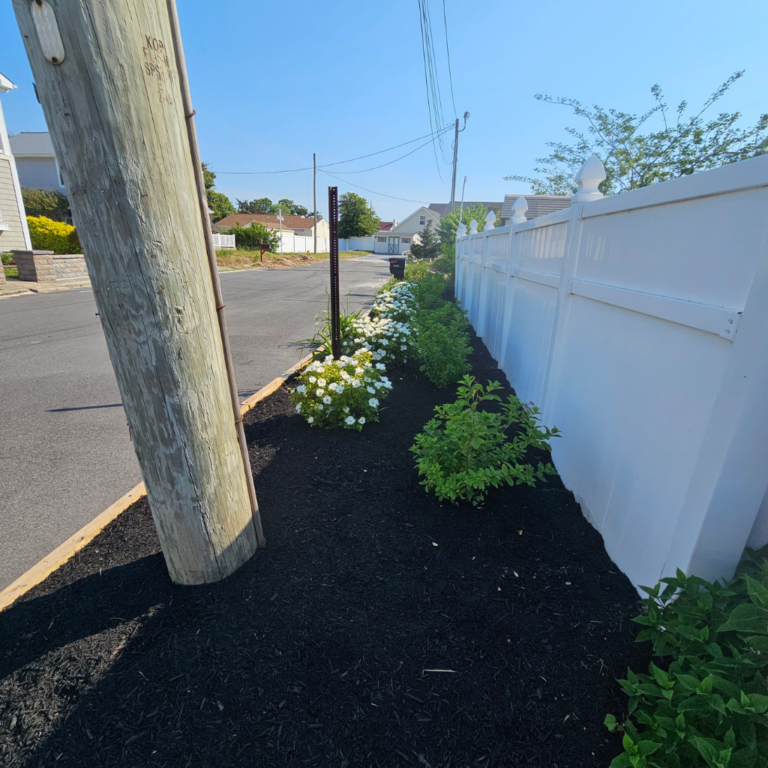
Fresh mulch is the detail that makes a home’s beds look finished and cared for, and it does real work while it is down. It holds moisture in the sandy soil that otherwise dries out fast down here, keeps weeds from taking over the beds, evens out the soil temperature through the season, and helps keep loose ground from washing in a hard rain.
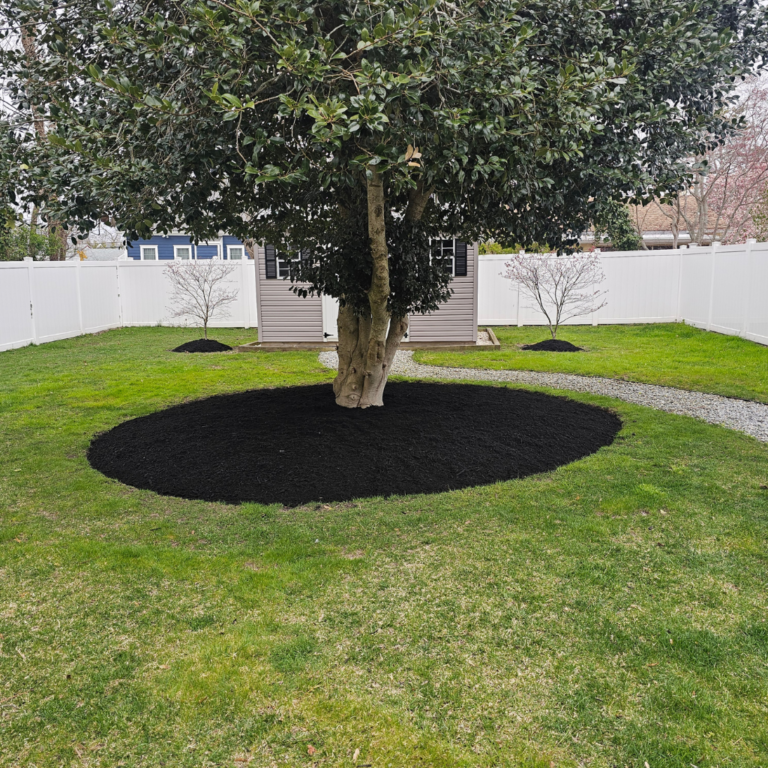
The work is in the prep and the placement, not just dumping mulch on top of last year’s, so we clean out the beds first, re-cut the edges, and lay it at an even depth around the plantings and trees. We keep it back off the stems and trunks so nothing sits wet and rots, and as last season’s mulch fades and breaks down, we refresh it so the beds stay sharp and dark instead of thin, grey, and weedy.
Mulch goes hand in hand with the beds it sits in, so we also handle flowerbed design and planting when a property needs the beds built or replanted.
What Our Mulch Installation Covers
Bed Cleanout and Edge Re-Cut
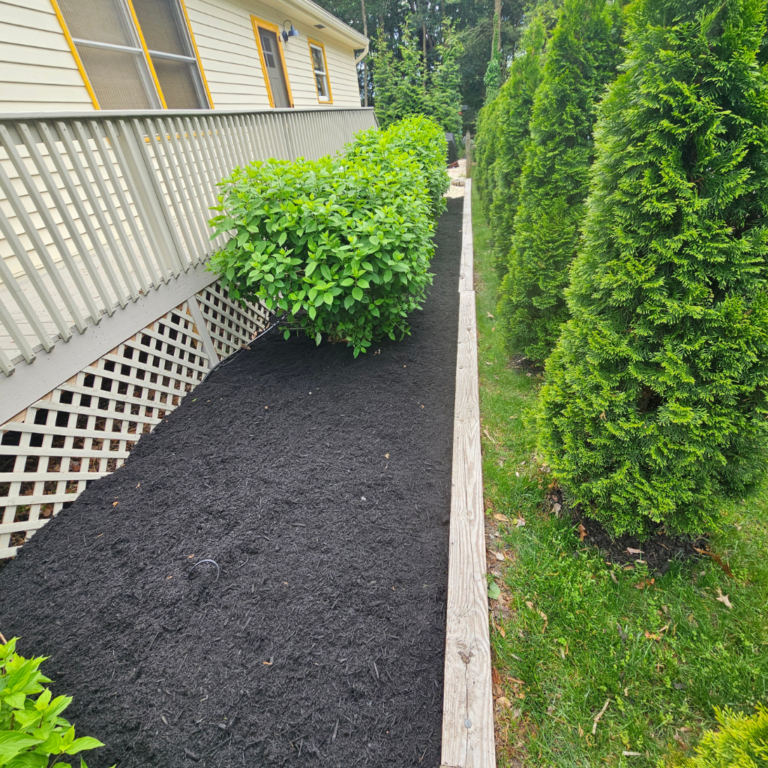
Mulch laid over a messy bed just locks in the mess, so the job starts before any new material goes down. We pull the weeds out at the root, clear the leaves, sticks, and debris that have blown in, and break up the old mulch where it has matted into a crust that sheds water instead of letting it through.
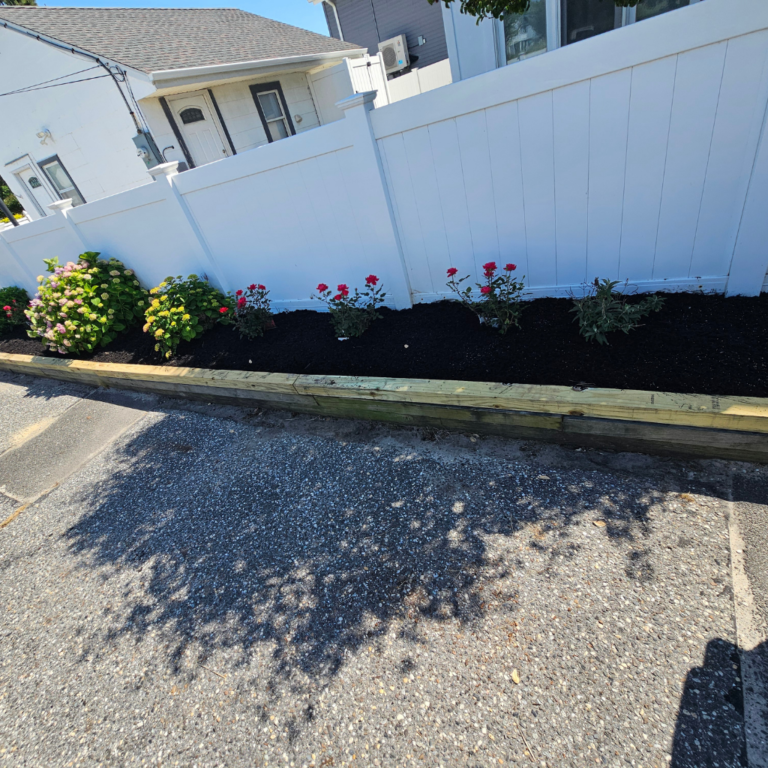
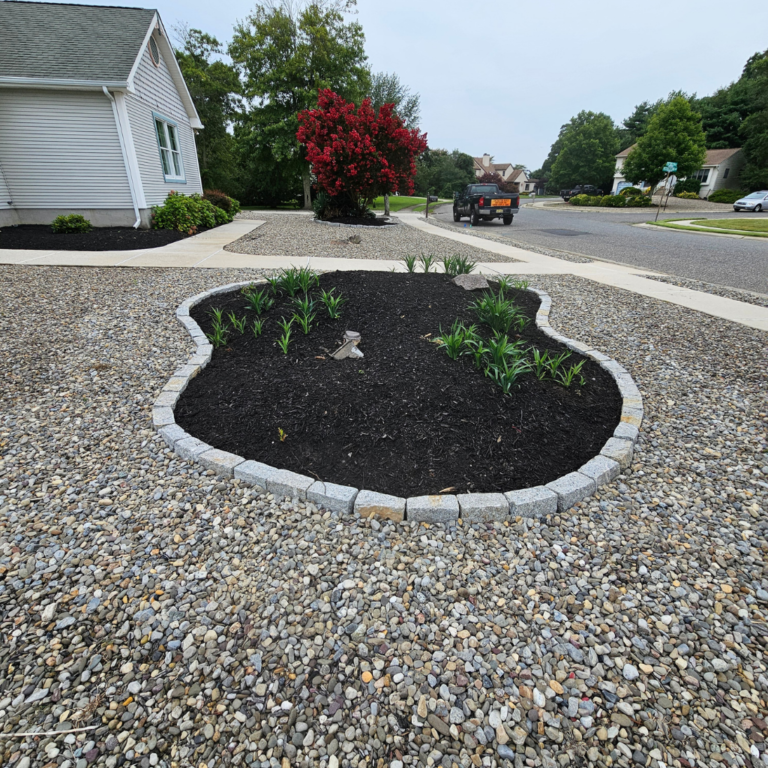
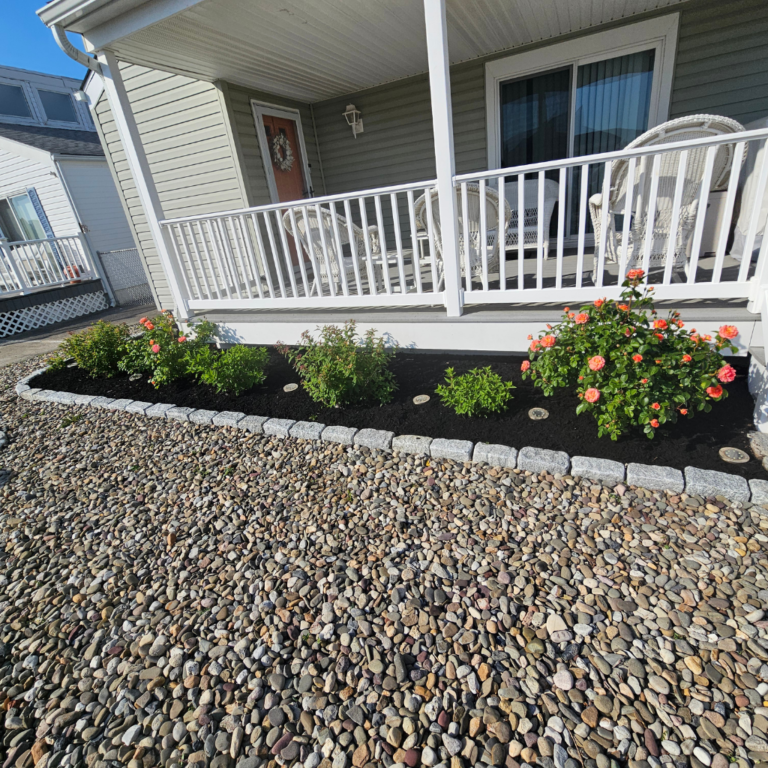
Then we re-cut a crisp spade edge where the bed meets the lawn or the walk, which is half of what makes a freshly mulched bed read sharp from the curb. That cut edge also gives the new mulch a wall to sit against, so it holds in the bed instead of washing into the grass the first hard rain. By the time we lay anything, the bed underneath is clean, edged, and ready, not just covered over.
Even-Depth Mulch Installation
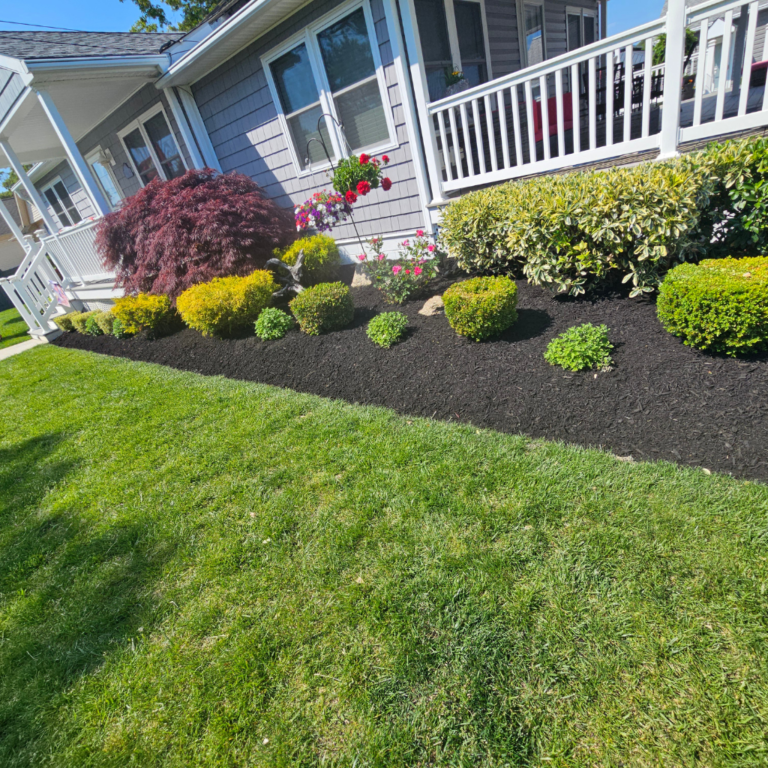
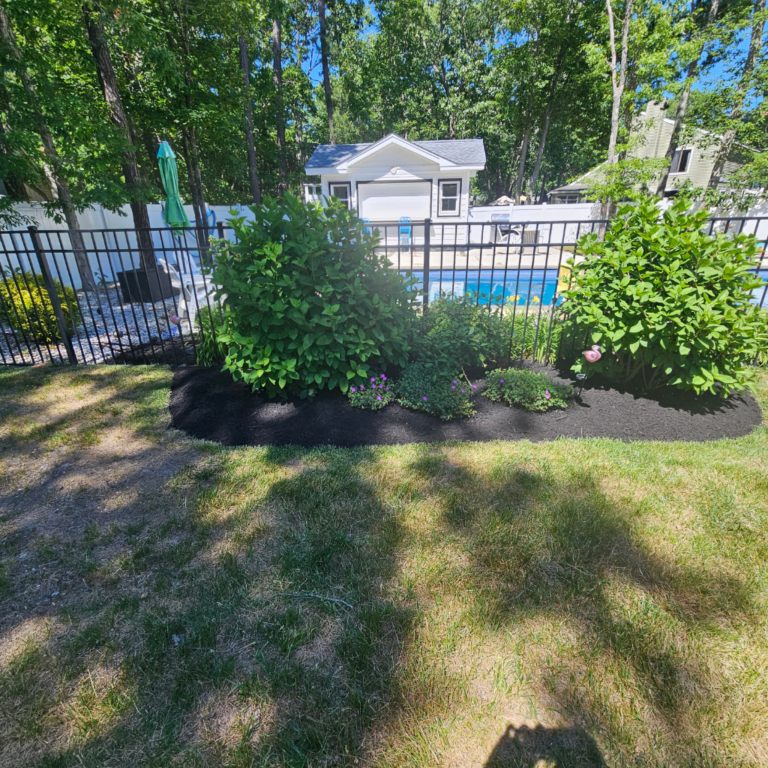
Depth is what makes mulch work and what makes it look right. Too thin and the weeds push straight through and the color burns off in weeks, too thick and it caps the soil and holds water against the roots. We lay it at an even depth across the whole bed and work it in around the plantings, so the bed reads consistent instead of patchy with bare spots and piles.
Around the base of every shrub and tree we pull the mulch back off the stem and the trunk flare, so nothing sits packed in damp material and rots at the collar, which is what kills plants that get mulched by someone in a hurry. We feather it clean into the edges and around the plants instead of just dumping and raking, so it sits at the right depth everywhere it matters.
Moisture Hold and Weed Suppression
The real work mulch does is under the surface, and it matters more here than most places. Sandy shore soil drains fast and dries out under the summer sun, and a proper layer slows that down, holding moisture around the roots so the plantings are not stressed between rains.
It shades the soil so weed seeds cannot get the light they need to take off, which means far less weeding through the season instead of a bed that has to be cleared out every few weeks. It also buffers the soil temperature as the seasons swing, so roots are not cooking in July or taking the worst of a cold snap. And it breaks the force of a hard rain hitting bare ground, so the bed holds together instead of washing and rutting and carrying your soil out into the lawn.
Seasonal Mulch Refresh
Mulch is not permanent. It fades from the sun, thins as it breaks down into the soil, and a bed that was sharp and dark in spring goes grey, flat, and weedy by the next if it is left alone.
We refresh it on a cycle rather than just burying old under new every year, clearing what has matted, topping the beds back to depth, and re-cutting the edges so the line stays crisp.
Refreshing to depth is also what keeps the weed suppression and moisture hold working, since a thinned-out layer quits doing its job long before it disappears. On a property full of beds we keep it on a schedule, so the whole place holds that finished look instead of sliding back between big resets. It is the difference between a bed touched up each season and one that has to be torn out and started over.
What Good Mulch Does for a Home
Mulch is a small line item that carries a lot of the look of a property, the layer that makes beds read finished and cared for rather than bare and forgotten.
Fresh, even mulch with clean edges signals a home that is kept up, and it shows in person and in every listing photo if you ever sell, while thin, grey, weed-shot beds drag the whole place down no matter how good the plantings are. Beyond the look, it does real work, holding moisture in the sandy soil, keeping weeds down, and protecting the ground from washing, which is exactly the work that matters most in shore conditions.
Down here, where sandy soil dries fast and a hard rain can move loose ground, a proper layer of mulch is part of what keeps a landscape holding up instead of struggling.