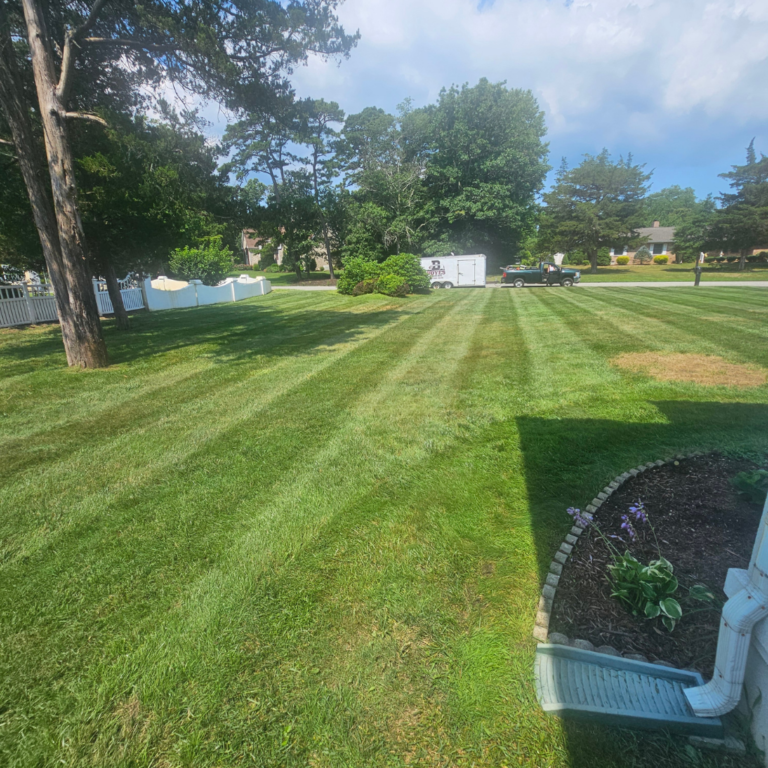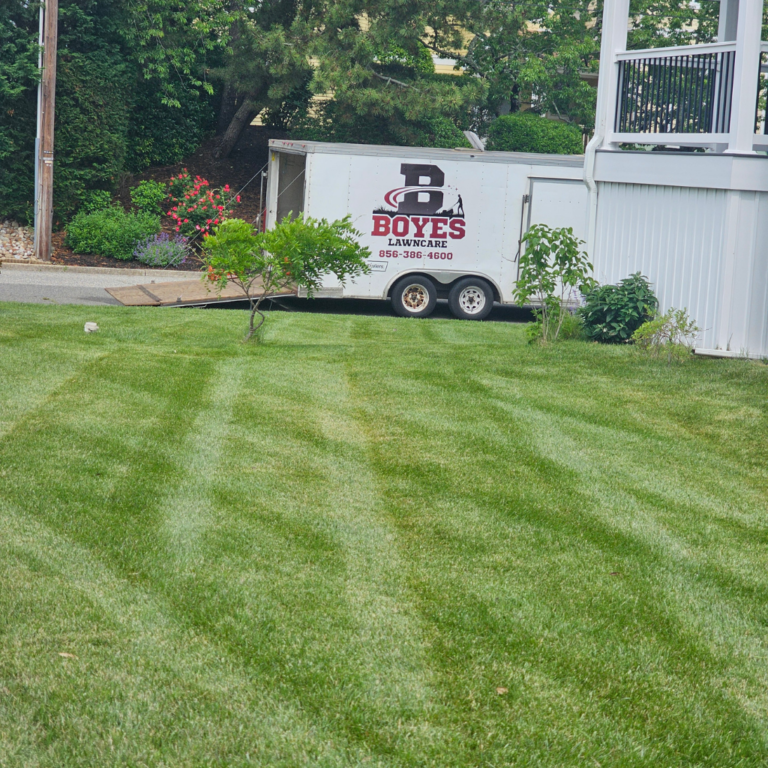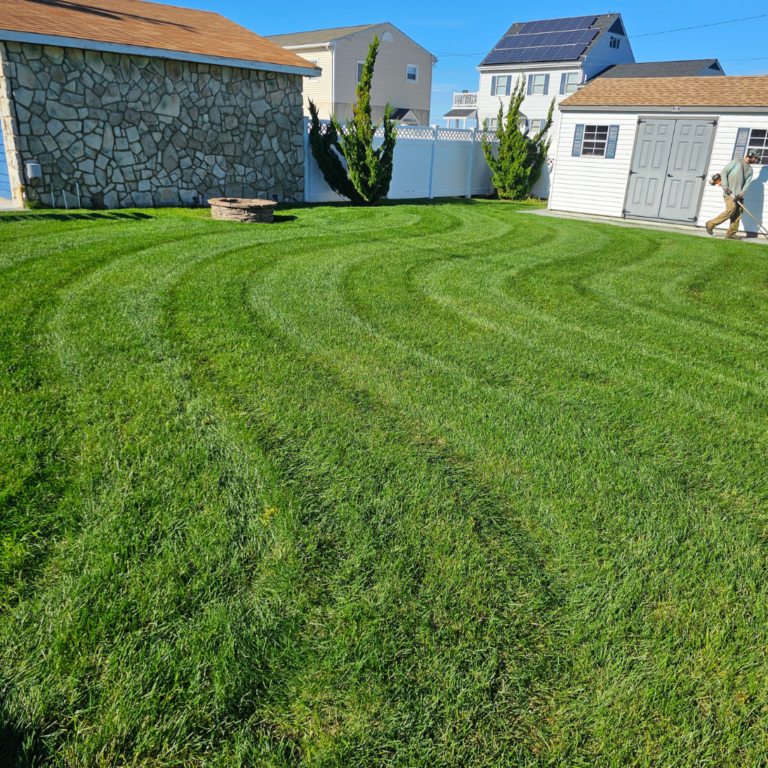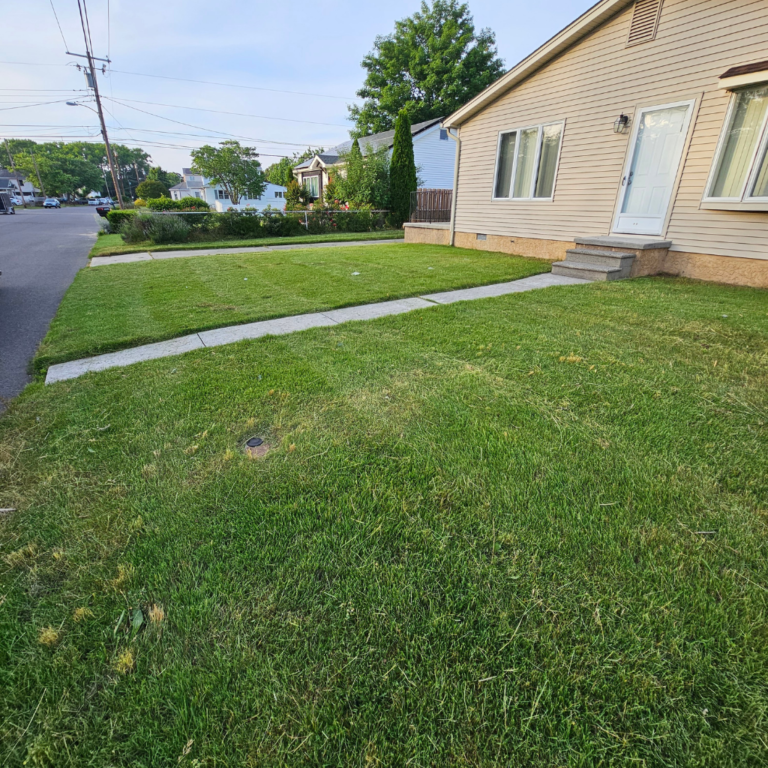
Tell Us About Your Lawn
Send us the basics on your property and the ground you want seeded, bare spots, worn-out areas, or brand new ground, and we’ll set up a time to take a look and get you an estimate.
What's Included in Lawn Seeding
Seeding is how bare ground, dead patches, and new areas become real, established lawn, but only if the seed reaches the soil and the right grass goes down for the conditions.
Sandy shore soil drains fast and dries out at the surface, so seed that is not worked into the ground rarely takes, and the wrong grass struggles from the first week no matter how it goes down.
We handle the parts that actually make it establish: prepping and loosening the ground into a real seedbed, getting the seed into firm contact with the soil, matching the blend to the sun, shade, and salt a given spot sees, and timing the work for the season so the weather is helping the new grass instead of cooking or washing it out.
The jobs run from a full new lawn on cleared ground to a single worn strip along a walkway, and we build each one to come in thick and hold rather than sprout once and thin right back out.
It’s one of our lawn care services for homes and commercial properties across lower Cape May County.
What Aeration Includes
New Lawn Seeding
For a new lawn area or ground that has been cleared or regraded, we seed it in from scratch.
We grade and level the surface so water runs off the way it should, break up and loosen the packed top of the soil, and rake it out to a true seedbed before any seed goes down.
Then we put the right seed down at the right rate and work it into firm contact with the soil, so it sits against dirt instead of perching on the surface, which is what gets even germination across the whole area instead of thick cover in some spots and bare in others.
A new lawn does not come in overnight, so we set you up for the weeks it takes to root and fill, with the goal being a full, even stand of real grass that holds, not a thin haze that comes up fast and thins right back out by midsummer.
Bare Spot and Patch Seeding
For dead patches, worn strips, and the bare spots a lawn develops along walkways, under trees, in the lanes that get the most foot traffic, and wherever the grass gave out, we seed them back in.
We clean out the dead material, scratch up and loosen the bare soil so the seed has something to root into, and match the seed to the grass already around it so the repair blends in on color and texture instead of standing out as an off patch. We feather the new seed into the edges of the surrounding lawn rather than leaving a hard line, get it into firm soil contact, and set the spot up to fill and knit into the rest.
On a commercial property that means worn, trafficked areas and the strips that always die back stop looking neglected; at a home it means the bare spots finally grow back and stay closed instead of widening a little more every season.
The Right Seed for Shore Conditions
Not every grass holds up down here, and the blend matters as much as how it goes down.
We match the seed to the spot: turf-type tall fescue handles the full coastal sun, heat, sandy soil, and salt with deep roots that take drought and traffic; fine fescues do the shaded side yards and the spots under trees where other grass thins out; and a perennial ryegrass component comes up fast to hold the ground while the slower grasses fill in behind it.
A lawn in open sun needs a different mix than a shaded corner or a commercial median, so we do not put the same bag down everywhere and hope. Picking the right seed up front, built for the salt air and the fast-draining sandy soil this close to the water, is the difference between a lawn that establishes and holds and one you are reseeding again next year.
Germination and Aftercare
New seed needs the right conditions for the first few weeks, and we set you up for them in plain terms.
The seedbed has to stay consistently moist while the seed germinates, which means light, frequent watering rather than one heavy soak that washes the seed around, then tapering off as the grass roots and you start mowing.
We tell you what to expect and when: how long until you see green, why the first growth comes in thin before it thickens, and how to hold off heavy traffic and that first mow until the grass is rooted and tall enough to cut high without tearing it back out of the ground.
Get those first weeks right and the seed comes in thick and even; rush the watering or the mowing and you can undo the whole job. We also line the seeding up with the season so you are establishing grass in cool, growing weather instead of fighting summer heat or an early frost.
Why Seeding Matters for Your Lawn
Grass does not come back on its own once it is gone. Where traffic, shade, salt, or heat have worn a lawn down to bare dirt, or on new or cleared ground, there is nothing left to spread and fill the space back in, and mowing and watering cannot grow grass that is not there. Bare ground also does not just sit and wait.
On the fast-draining sandy soil this close to the water it washes and erodes in hard rain, it compacts into hardpan that nothing wants to grow in, and weeds and crabgrass move straight into the open space, because bare dirt is the first thing they colonize. It tracks into the house or the building and turns to mud every time it rains on top of that.
Seeding is the only thing that actually puts grass back and closes that ground off: seed a bare or worn area and it becomes real turf instead of a washing, weed-growing patch, and seed a new area and it comes in as a full lawn from the start instead of a dirt lot you are waiting on. On a commercial property that is the difference between grounds that look finished and ones that look neglected, which is exactly what people notice walking up; at a home it is the difference between a lawn you are proud of and one you keep apologizing for.
It only gets harder the longer the ground sits open, because the weeds and the washing get a head start you then have to undo before the grass even has a chance, so the move is to establish it while the ground is still clean.