Tell Us About Your Gravel Project
Send us the basics on your property and what you are after, a gravel driveway, a parking pad, or a gravel area redone, and we’ll set up a time to come take a look and get you an estimate.
What's Included in a Gravel Project
Gravel is the workhorse surface of a property, the driveway, the parking pad, the firm area you need usable without the cost of pavers or poured concrete, and done right it is clean, durable, and far less fussy than it gets credit for.
The difference between gravel that holds for years and gravel that ruts, scatters, and grows weeds is all in the base and the edges, not the stone you can see, which is exactly where most gravel jobs go wrong. We grade and compact a real base, set the right gravel for how the surface gets used, and edge it so it stays contained instead of migrating into the lawn.
Down here, where the ground is soft and sandy and a hard rain moves loose material fast, that base and that edging are what keep gravel from washing out and spreading. Gravel surfaces are most often contained with Belgian block edging, and for stone paths and walkways we handle stone walkways as its own work.
What Goes Into a Gravel Project
Gravel Driveways
A gravel driveway is a clean, durable, lower-cost alternative to pavers or blacktop when it is built on a real base, and a soft, rutted mess when it is not, so the base is where the whole job is won or lost. We dig out and build a compacted base that carries the weight of vehicles, then set the surface gravel on top to a consistent depth, so it holds its shape under tires instead of pushing into ruts and potholes.
We build the surface to a fall that sheds water and edge it so the gravel stays in the driveway instead of spreading into the lawn with every pass. On a long or sloped drive especially, the base and the fall are what keep a hard rain from carving channels straight down it. Done right, a gravel driveway holds and drains for years, not one you are raking back and topping up every few months.
Parking Pads and Gravel Areas
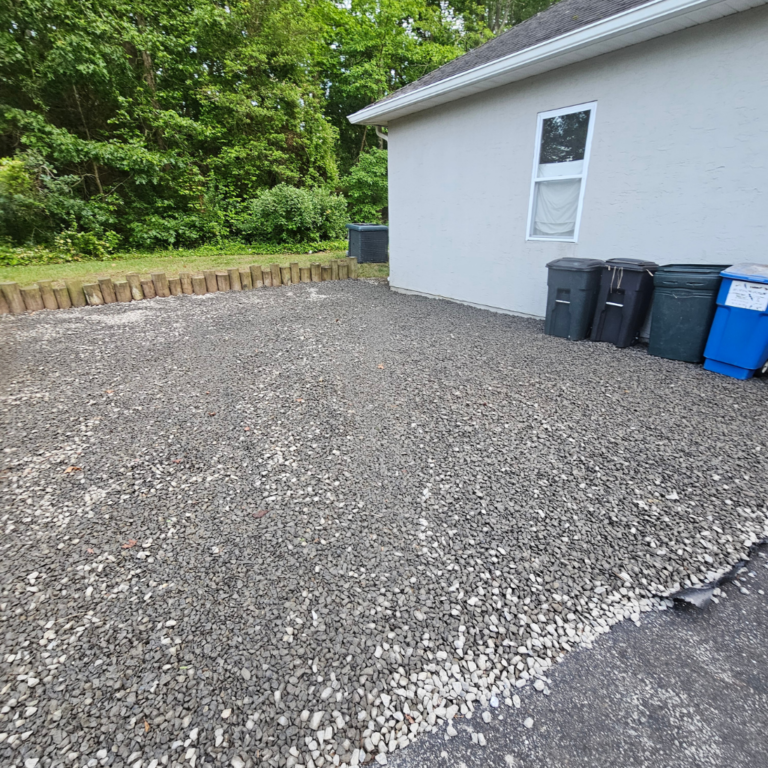
Beyond the main driveway, gravel is the right call for the extra surfaces a property needs, an overflow parking pad, a spot for a boat or trailer, a pad by the shed, or a firm area where grass never holds anyway. We build these the same way we build a driveway, on a compacted base cut to the right depth, so they take the weight and the traffic without sinking into the soft ground.
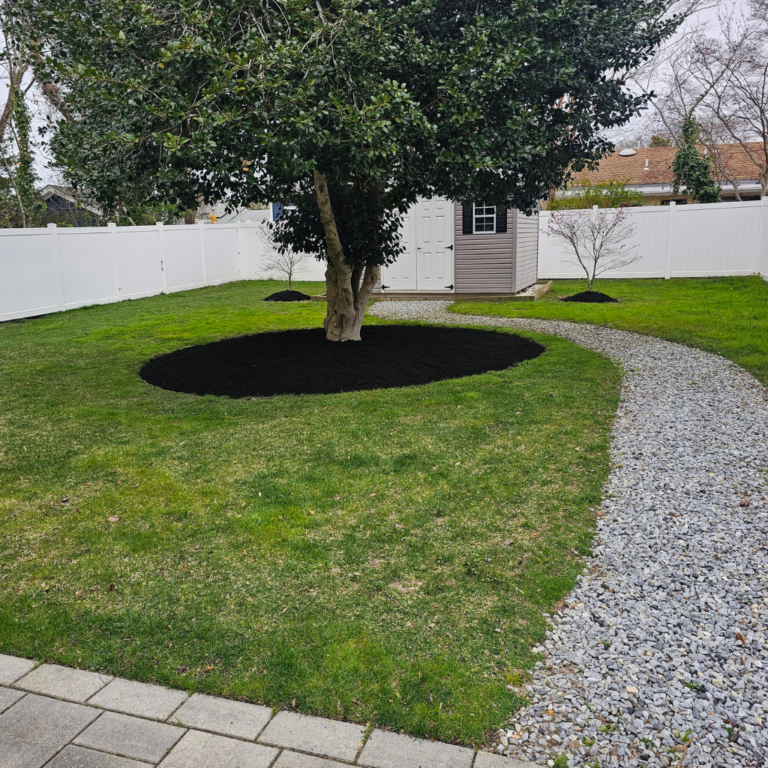
Each area gets edged and set to drain, so it stays a defined, usable pad instead of a vague patch of gravel bleeding into the yard. On the smaller beach-block lots down here, a gravel pad is often the most sensible way to fit parking onto a tight property. It is a practical, lower-cost way to add usable surface without pouring concrete or laying pavers where you do not need them.
The Graded, Compacted Base
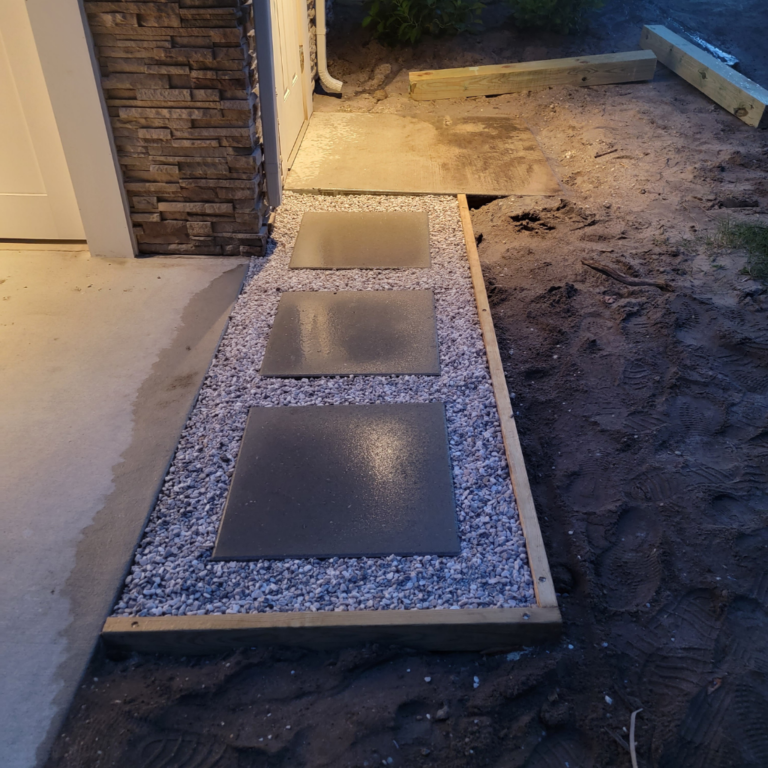
Everything that makes a gravel surface last is in the part you do not see. We dig out the soft topsoil, set the depth the surface needs for how it gets used, and build the base up in compacted material, so it carries the load instead of pushing into ruts.
The base is also cut to a fall, so water drains off and through instead of sitting and softening the ground under it, which is what turns a gravel surface to soup in the low, damp ground down here. Where the ground needs to be reshaped before the base goes in, we handle the grading first. Skipping or shorting the base is the single most common reason a gravel surface fails, and it is the part we do not cut.
The Right Gravel and a Real Edge
The wrong stone and no edge are the other two ways a gravel surface fails, after a bad base. Angular, crushed gravel locks together and packs into a firm, stable surface, which is what you want under tires and underfoot, where rounded stone rolls, scatters, and never sits still, so we set the material to the use.
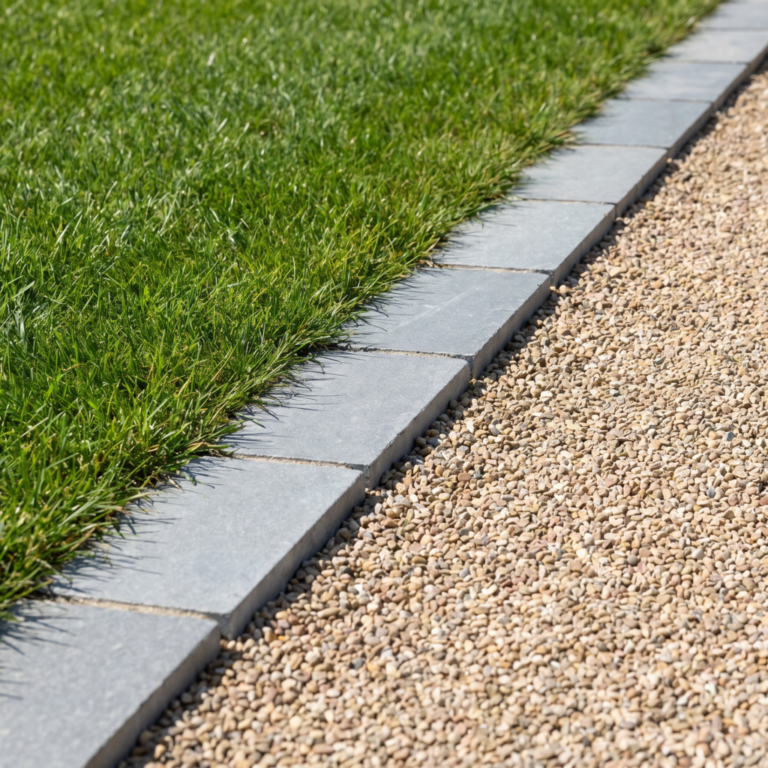
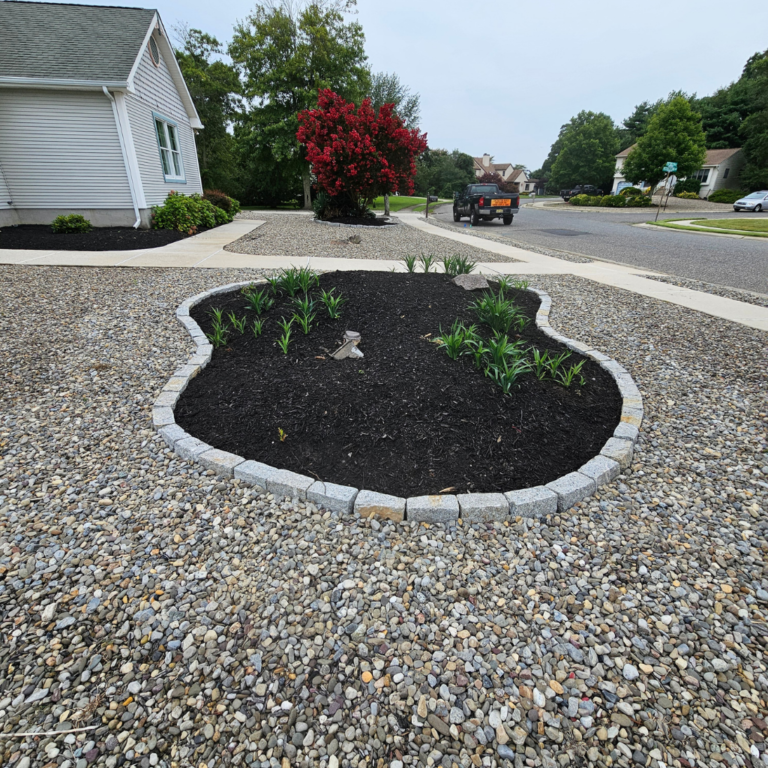
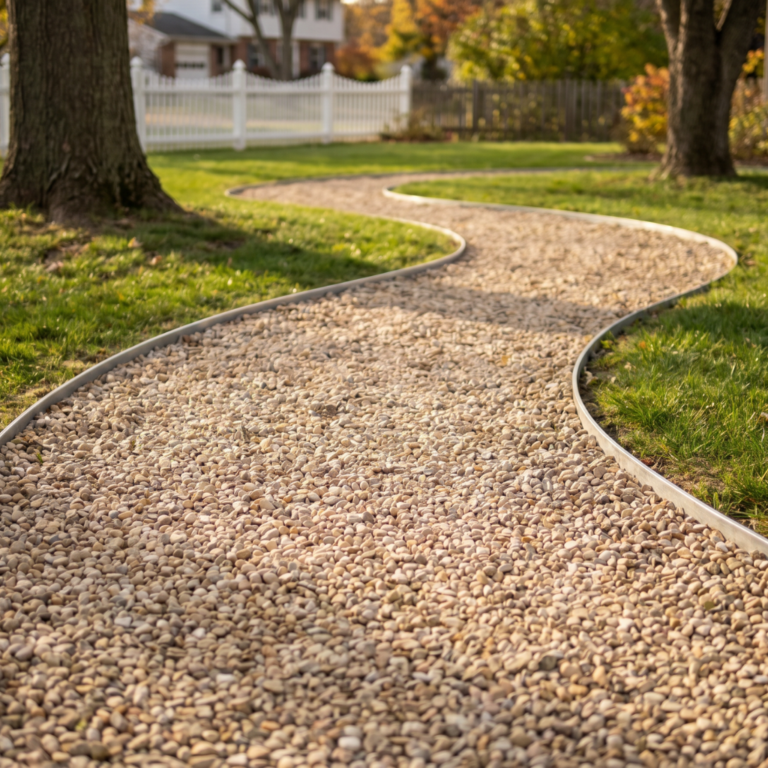
Just as important, we contain the surface with a real edge, often Belgian block, so the gravel stays where you put it instead of spreading a little wider every season until it has bled into the lawn and thinned out in the middle. The right gravel on a real base inside a real edge is a surface that holds for years. Without those, you are raking and topping up forever.
What a Good Gravel Install Does for a Home
Gravel is a smart way to add durable, usable surface to a property, a driveway, a pad, or a firm work area, at a lower cost than pavers or poured concrete, but only when it is built to hold.
Done right, it is clean, firm, and draining, and it reads as an intentional part of the property instead of a rough patch of loose stone slowly spreading into the grass.
Done wrong, it ruts, scatters, washes, and grows weeds, and it becomes a constant chore of raking, topping up, and pulling gravel out of the lawn. Down here, where the soft, sandy ground and a hard rain work against a loose surface, the base and the edging are what separate gravel that lasts from gravel that never sits still, which is exactly the part we build right.