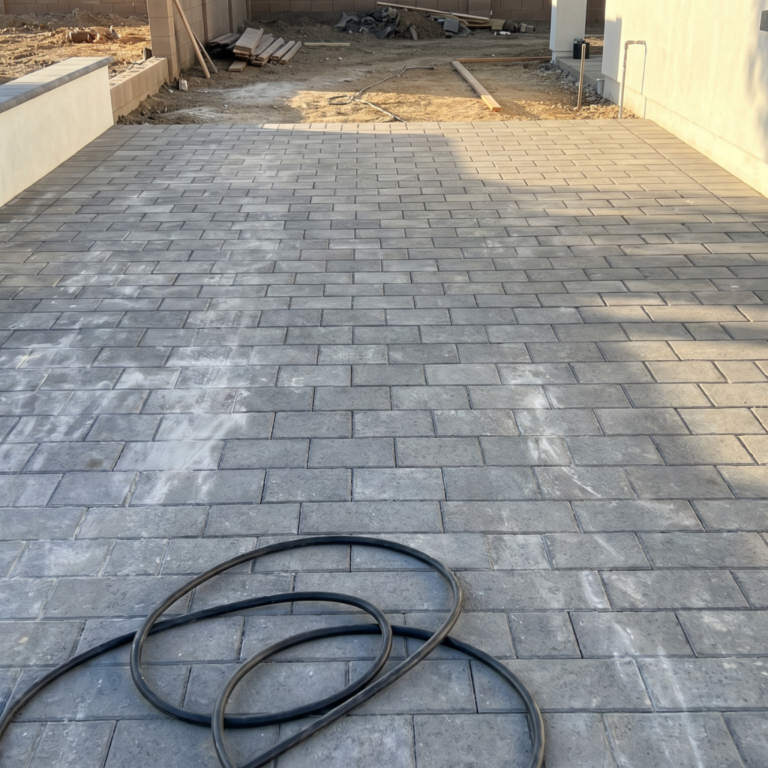
Paver Driveways in Lower Cape May County

Paver driveways built on a real base to hold up to the salt, the sun, and the freeze and thaw down here, with clean edges and a surface that does not soften, crack, or fade like blacktop. Built once, built right, for year-round homes and shore properties alike.

Trusted By Our Community

Over a decade caring for lawns and landscapes across lower Cape May County.

Tell Us About Your Driveway

Send us the basics on your property and what you are after, a new paver driveway, a replacement for cracked blacktop, or a tired driveway redone, and we’ll set up a time to come take a look and get you an estimate.

What's Included in a Paver Driveway

A driveway is one of the first things anyone sees pulling up to a home, and it is one of the few parts of a property you use every single day, so it has to look right and hold up. The catch is that almost all of the work that decides whether a driveway lasts is under the surface, in the base, where you never see it, which is exactly why so many driveways fail early.


We build the base right, set the pavers tight on top of it, and finish the edges and the fall so the driveway holds its shape, sheds water, and reads sharp for decades instead of cracking, sinking, and fading in a few seasons. Down here the salt, the sun, and the freeze and thaw are hard on a driveway, and a paver driveway built on a proper base takes those conditions where a slab of blacktop slowly loses to them. A paver driveway pairs with Belgian block edging for the borders and apron, and when the ground needs to be reshaped first we handle the grading before the base goes in.
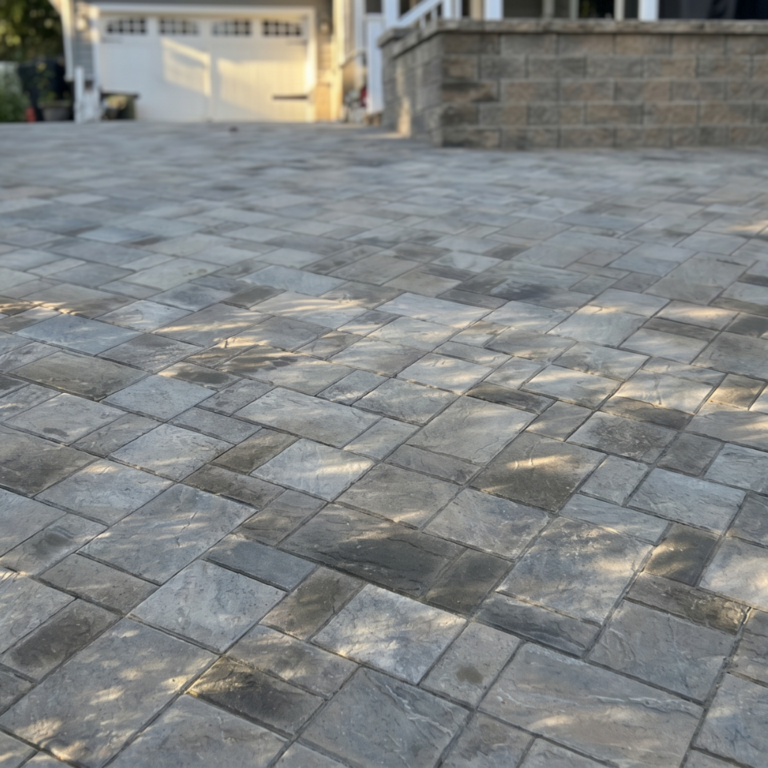
What a Paver Driveway Covers

Digging Out and Building the Base

Almost everything that decides whether a driveway lasts happens in the base, under the surface, before a single paver goes down.

We dig out to the depth the driveway needs, then build the base up in compacted layers of the right material, so it carries the weight of vehicles without settling, rutting, or pushing up in the freeze and thaw.

On the soft, sandy ground down here, that base is what keeps a driveway from sinking into low spots and waves a season or two in, which is how most cut-rate driveways fail. We compact each layer as we build it, not just the top, so the whole base is solid all the way down. Get the base right and the surface holds, get it wrong and nothing you lay on top of it will save it.

Paver Driveway Installation

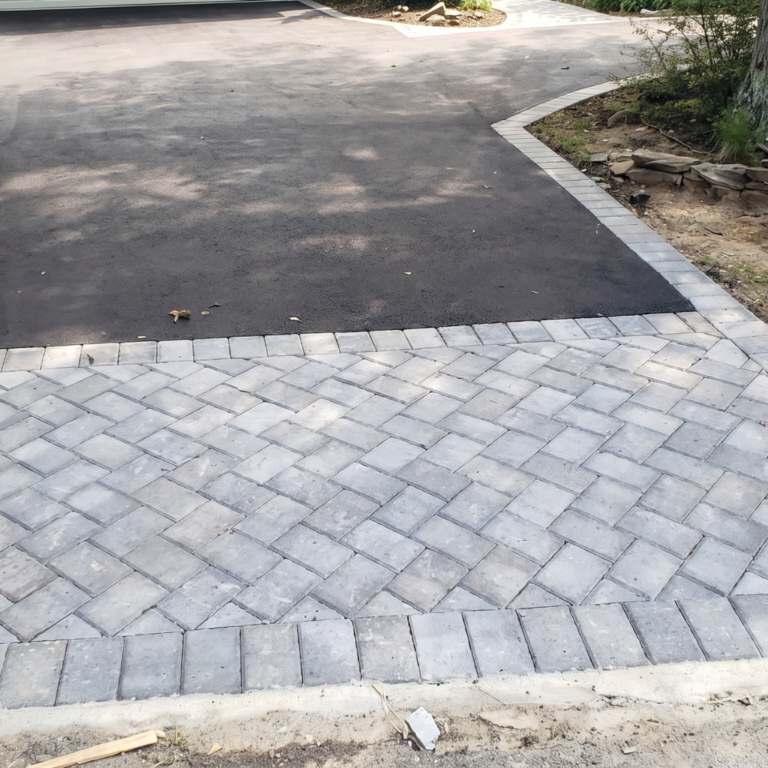
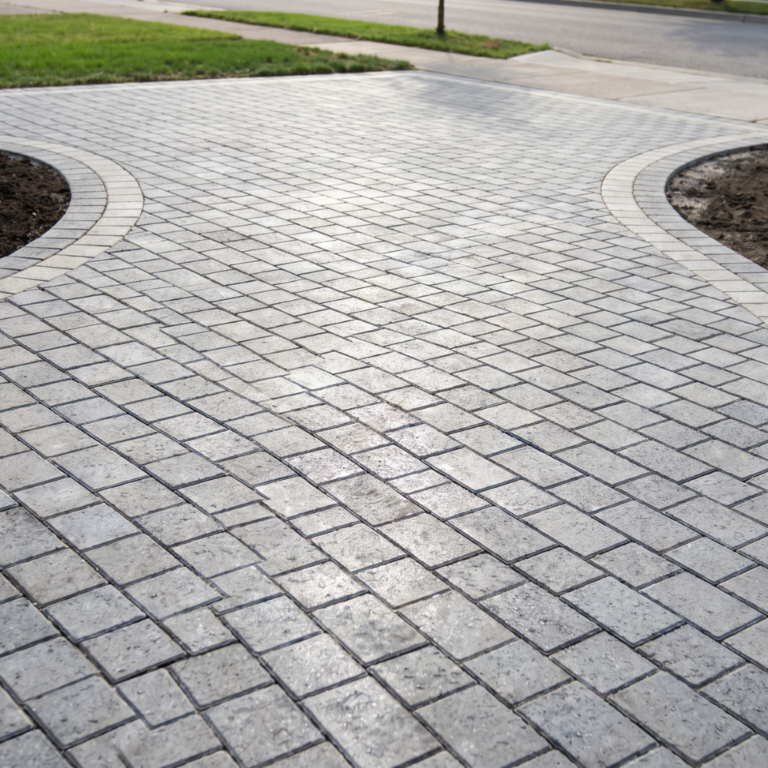
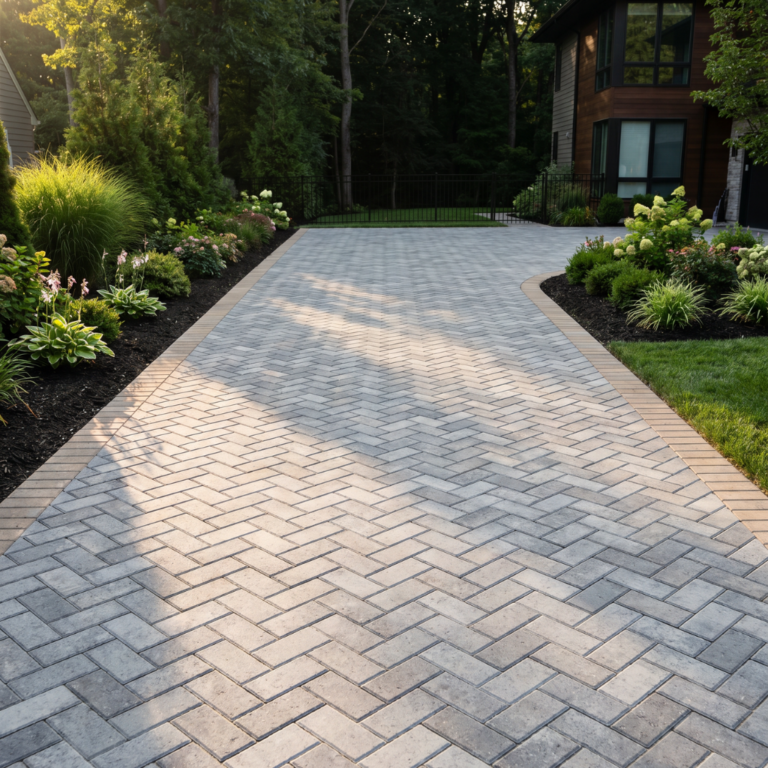
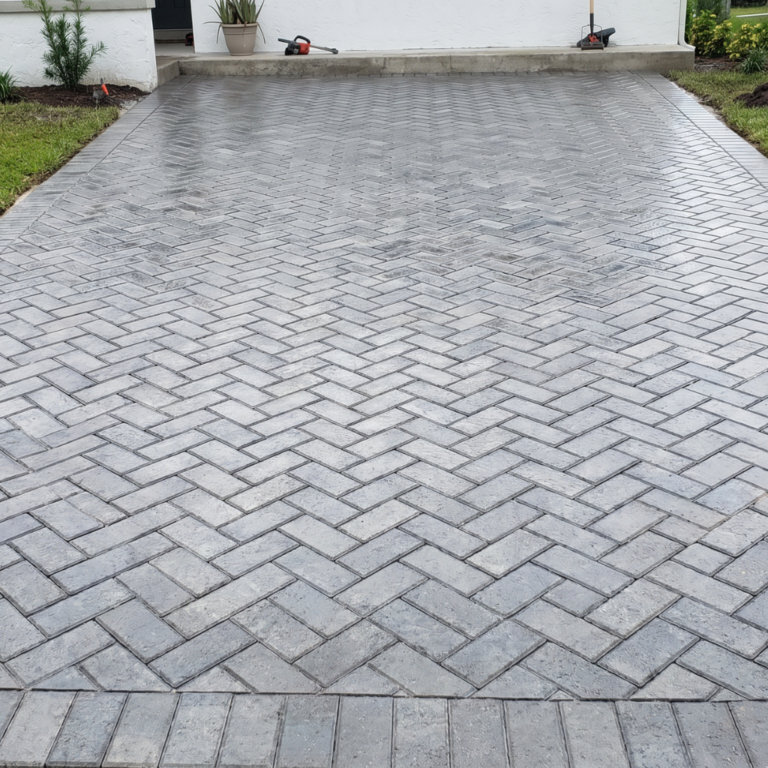
With the base set, we lay the pavers tight and to a pattern that locks together and carries the load across the whole field instead of through any one stone.

The pattern and the cuts get worked around the shape of your driveway, the curves, the apron at the street, and the borders, so the lines read clean and intentional rather than patched together. We set the pavers to the fall we planned, so the finished surface drains instead of holding puddles, and we lock the joints with the right jointing so the field stays tight underfoot and under tires.

The result is a surface that reads as one driveway, not a grid of loose blocks, and that you can use the day it is finished.

Edging and Drainage

A paver field is only as stable as what holds it in, so the edges get a restraint that keeps the pavers from spreading and creeping out of line under years of traffic. We set clean borders, often in Belgian block, that hold the field tight and give the driveway a finished edge instead of a ragged one that crumbles into the lawn or the beds.

The whole driveway is built to a fall that carries water off the surface and away from the house, so it sheds instead of ponding and freezing. That drainage is part of why a paver driveway holds up here, where standing water and freeze and thaw are what break a surface apart.

Pavers Over Blacktop

Blacktop is cheaper going in and it shows down here, softening and getting tacky in the full summer sun, fading from black to grey, and cracking as the ground moves under it until you are patching it every few years.

A paver driveway does not soften, it does not fade the same way, and when the ground shifts it flexes instead of cracking into a spider web you cannot fix. If a section ever does settle or a paver gets damaged, individual pavers come up and go back down with no patch or seam to show for it, where blacktop gets an obvious dark patch every time.

It costs more up front and it earns that back in a driveway that still looks right in fifteen years instead of one you are resealing, patching, and eventually tearing out.

What a Good Driveway Does for a Home

A driveway is a big piece of the front of a home, the first surface you see pulling up and a large part of whether a property reads as cared for or worn out.


It is also one of the most used parts of the place, under tires and underfoot every day, so when it cracks, sinks, or fades it drags down the whole look and turns into a constant repair.


A paver driveway built on a real base does the opposite, holding its shape and its look for decades and adding real value to the home, which shows in person and in every listing photo if you ever sell. Down here, where the salt, the sun, and the freeze and thaw wear hard on a surface, the driveways that still look right years later are the ones built for the conditions on a base that holds, not poured cheap and patched ever after.

01

A Driveway Built Right, Whether or Not You're There

A driveway is heavy, disruptive work you only want to do once, and a lot of properties down here are second homes the owner does not want to be standing over while it gets built. We handle it start to finish, the digging, the base, the pavers, and the cleanup, and we build it to last so it is not something you are dealing with again in a few years. A paver driveway is also low upkeep by nature, which is exactly what you want on a place you are not at every day, no resealing schedule and no patching to keep on top of.

Whether it is a year-round home where the driveway gets used hard every day or a shore property you only get to on weekends, the point is the same: it is built once, built right, by people who know what the salt and the freeze and thaw do down here and live right here. You come back to a driveway that holds, not one already starting to go.


How a Paver Driveway Project Runs

01

Driveway Consultation and Estimate

We come out, look at the existing driveway or the space for a new one, and talk through what you want, the look, the layout, and the material, then read the ground and the drainage.


You get a clear estimate up front before anything is scheduled.

02

Plan the Driveway and the Base

We plan the layout, the pattern, the borders, and the fall the surface needs to drain, and we plan the base depth around the soft ground down here.


Nothing gets dug until the driveway is laid out and the base is specced for what it has to hold.

03

Digging Out and Building the Base

We dig out to depth and build the base up in compacted layers, so it carries the load and holds through the freeze and thaw.


This is the part you never see and the part the whole driveway depends on.

04

Install, Set, and Finish

We lay the pavers to the pattern and the fall, set the edge restraint and the borders, lock the joints, and do a final compaction and cleanup, so you are left with a finished driveway you can use that day.

02

Towns We Serve in Lower Cape May County

We build driveways across the lower county, out of our base in Villas, covering Cape May, West Cape May, Cape May Point, North Cape May, Erma, Town Bank, and Cold Spring.

We also run north to Cape May Court House, Rio Grande, Whitesboro, Burleigh, Green Creek, Del Haven, and Mayville, along with Diamond Beach and the Wildwoods, Wildwood, Wildwood Crest, North Wildwood, and West Wildwood, where the smaller beach-block lots are often more hardscape than grass. From year-round homes to shore properties, if your place is in any of these, we can take it on.

5.0
Google reviews

Why Homeowners Choose Our Driveways

Homeowners bring us in for driveways because we build the base right and finish the edges and the drainage, instead of laying a nice-looking surface on a base that gives out in a couple of years.

We dig out to depth, compact the base in layers, set the pavers tight, hold the field with a real edge, and build the fall so it sheds water. We treat a year-round home and a weekend shore place the same way, to one standard, and we are local, so we know exactly what the salt and the freeze and thaw do to a driveway down here.

Most of our work is repeat and referred, the kind that comes from neighbors seeing a driveway that still looks right years later.

03

Driveway Problems We Fix

Most of the driveways we get called out to are dealing with the same things.

Blacktop that has cracked, faded, softened in the heat, or broken up at the edges, that the owner is tired of patching and resealing.

A paver or stone driveway that was laid on a poor base and has settled, rutted, or gone wavy, because the base under it was never built to hold.

A worn or plain driveway that drags down the front of the house and needs to be rebuilt as something that looks right and lasts. We handle each of these by building the base correctly first and then finishing the surface and the edges, so it holds instead of failing again.

Your Local Driveway Crew

Boyes is a family-run crew based right here in Villas, and hardscaping is a big part of what we do across lower Cape May County, for year-round residents and shore-property owners alike.

We lead with driveways and Belgian block edging, and we also build the full range of hardscaping along with the landscaping around it, from beds and planting to sod and mulch. Being local means we are easy to reach and we know exactly what the salt and the freeze and thaw do to a driveway down here, which is half the job.

Driveway Questions We Get a Lot

Because down here blacktop softens in the heat, fades, and cracks as the ground moves, and you end up patching and resealing it every few years.


A paver driveway built on a real base does not soften or fade the same way, flexes instead of cracking when the ground shifts, and any damaged section can be lifted and reset with no patch to show, so it holds its look for decades.

The base, almost entirely. A driveway that settles, ruts, or goes wavy almost always had a base that was too thin or never compacted right, so we dig out to depth and build the base up in compacted layers before any surface goes down.


Get the base right and the surface holds, get it wrong and nothing on top of it will save it.

Yes, that is a lot of what we get called for.


We take out the old surface, build the base properly for the new driveway, and lay the pavers with finished edges and the right fall, so you go from a driveway you are always patching to one that holds.

No, which is part of why it works so well on second homes and shore places.


There is no resealing schedule and no patching to stay on top of, and if a section ever needs attention, the pavers come up and go back down cleanly, so it is about the lowest-maintenance driveway you can put in.

Yes, Belgian block is one of the most common ways we border and finish a paver driveway, both for the look and because the edge restraint holds the field tight.


We can build the driveway and the edging together as one job.

04

Let's Build Your Driveway Right

Tell us about your property and what you have in mind, and we’ll come take a look, talk through the options, and get you a free estimate.