Tell Us About the Ground
Send us the basics on your property and what is going wrong, water pooling, a wet yard, ground running toward the house, or a base that needs leveling before sod or a patio goes in, and we’ll set up a time to come take a look and get you an estimate.
What's Included in Our Grading
Grading is the groundwork the rest of a landscape sits on, and when it is wrong, everything on top of it struggles, water pools, beds wash, and a lawn never quite takes.
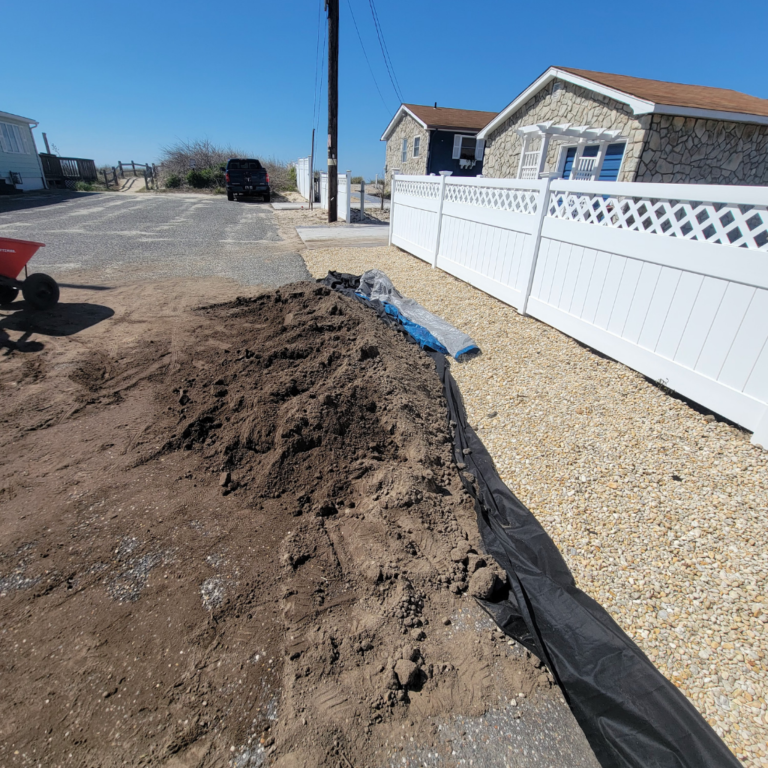
The job is reshaping the ground so it sheds water the right way, away from the house and off the property, instead of collecting in low spots and running where you do not want it. Down here, where the ground is sandy and low and the water table is close, getting the grade right is often the difference between a yard that drains and one that stays soft and wet for days after a rain. We read how the water moves across your property, reshape the ground to fix it, and leave a surface that is ready for whatever comes next.
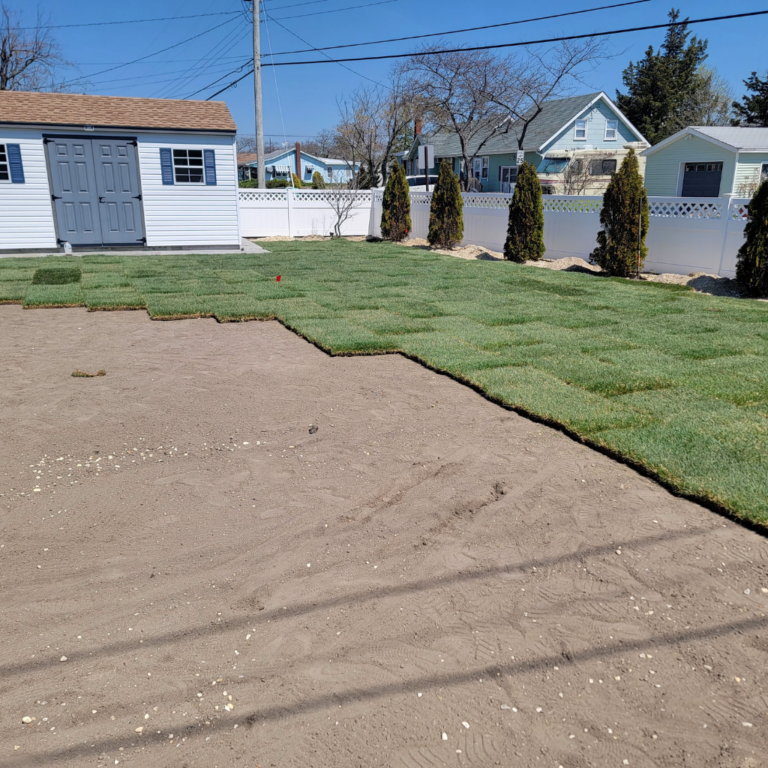
When a lot has to be opened up before the ground can be reshaped, we also handle land clearing first, and once the grade is set we can move straight into sod installation.
What Our Grading Covers
Water Flow Correction
Most grading calls come down to water going where it should not, running back toward the foundation, collecting in a low corner, or sitting in the middle of the yard after every rain.
We read how the water actually moves across the property first, walking it and watching where it pools and where it runs, since the fix is only as good as reading the problem right. Then we reshape the ground so the surface carries water away from the house and off the lot, cutting down what is sending it the wrong way and building up what needs to shed.
The grade is set to a steady, continuous fall, so the water keeps moving instead of stalling in a flat spot and ponding. Getting the surface to carry water the right way is the whole point of grading, and it is what protects the lawn, the beds, and anything you build on top of it.
Leveling Low and Wet Spots
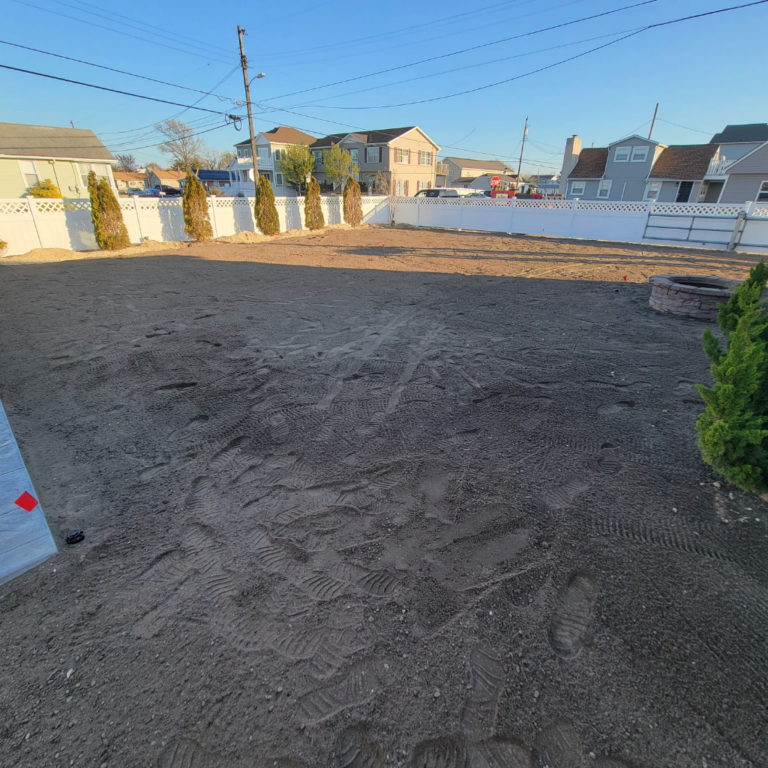
A low spot that holds water turns into a soft, muddy patch that drowns the grass, stays soggy for days, and never really dries out in the low, damp ground down here. We fill and level those low areas and smooth out the dips and ruts, so the surface sits even and water runs across it instead of pooling and sitting.
Where a spot has settled over the years, we bring it back up to grade and tie it cleanly into the ground around it, so there is no new dip left at the seam. We compact the fill as we go where it matters, so the leveled ground holds instead of sinking back into the same low spot in a season. That leveling turns a lumpy, wet yard into an even one you can actually walk, mow, and use.
Slope and Grade Shaping
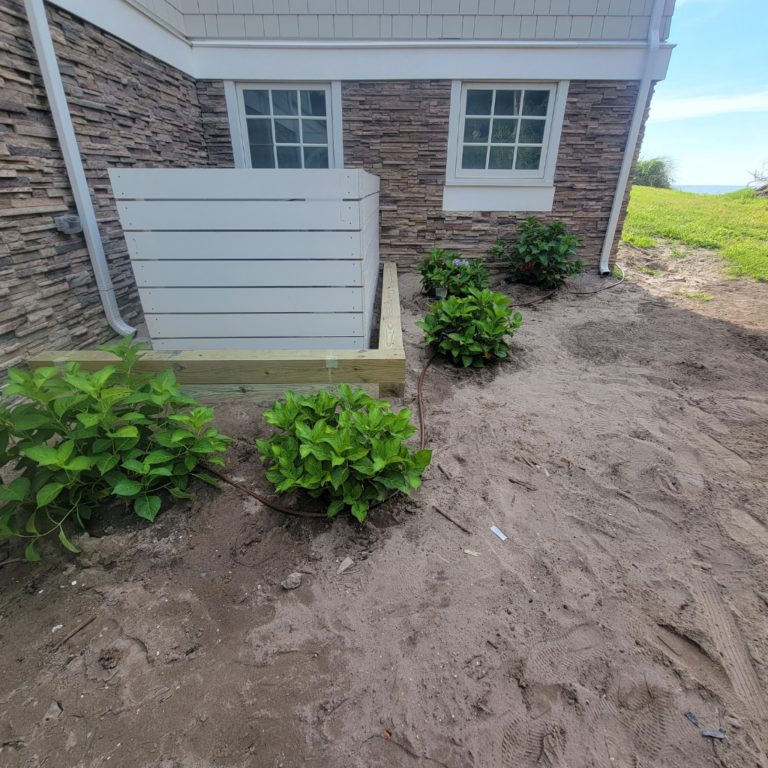
The fall of a yard, the slight, steady slope that carries water off, is something you never notice until it is wrong and the water starts coming back at the house. We shape the grade to a clean, consistent fall away from the foundation and the structures, enough to move water without leaving an obvious slope you can see or one that washes out under a hard rain.
Right around the house we set the ground falling away from the walls for the first several feet, which is the stretch that decides whether water sheds off or sits against the foundation. Across the rest of the property we carry that fall out to where the water should go, smoothing the transitions so it reads as a level-looking yard that quietly drains. On a property that has settled or was never graded right to begin with, re-establishing that fall is usually the whole fix.
Base Prep for Sod, Beds, and Hardscape
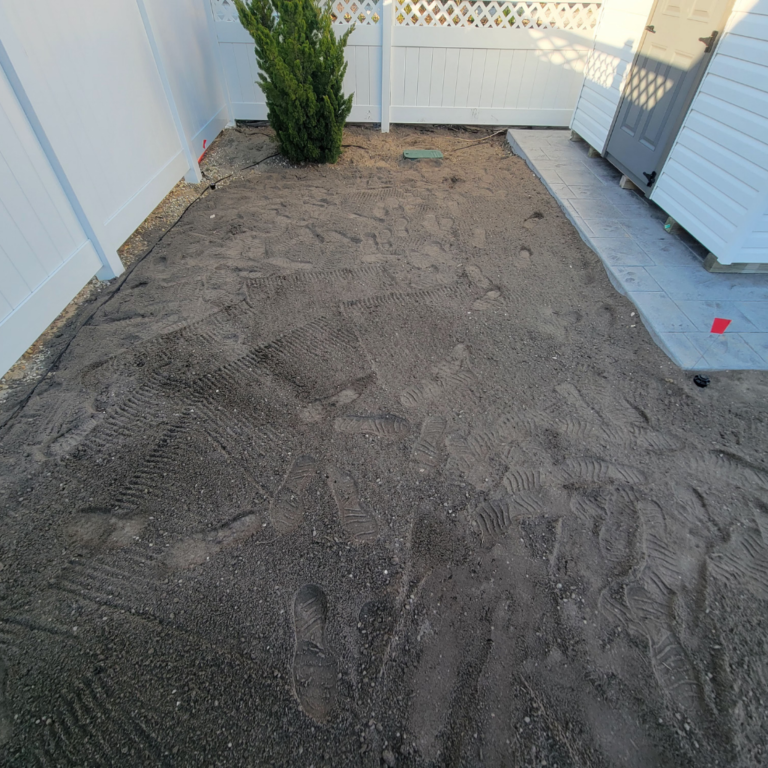
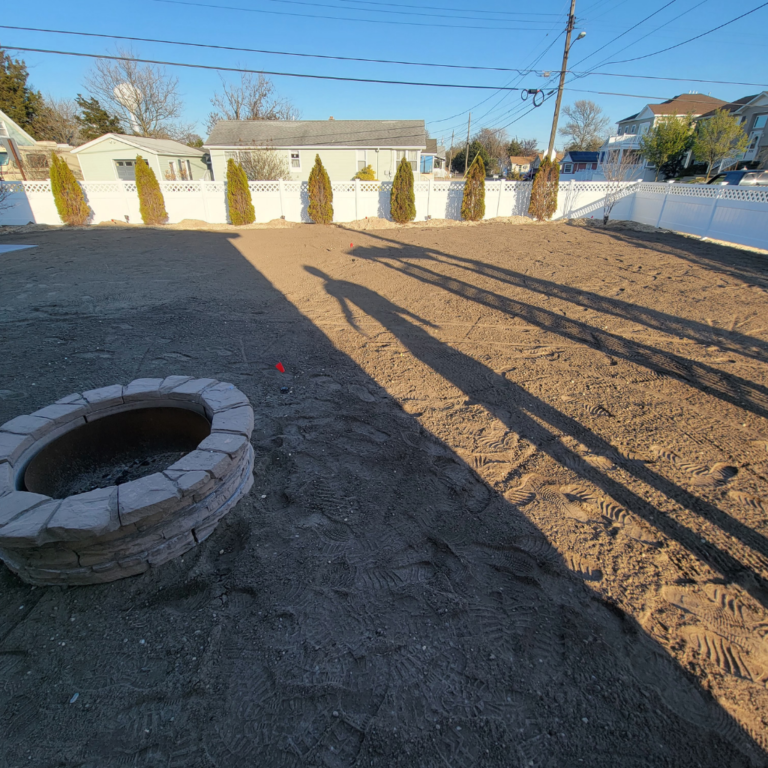
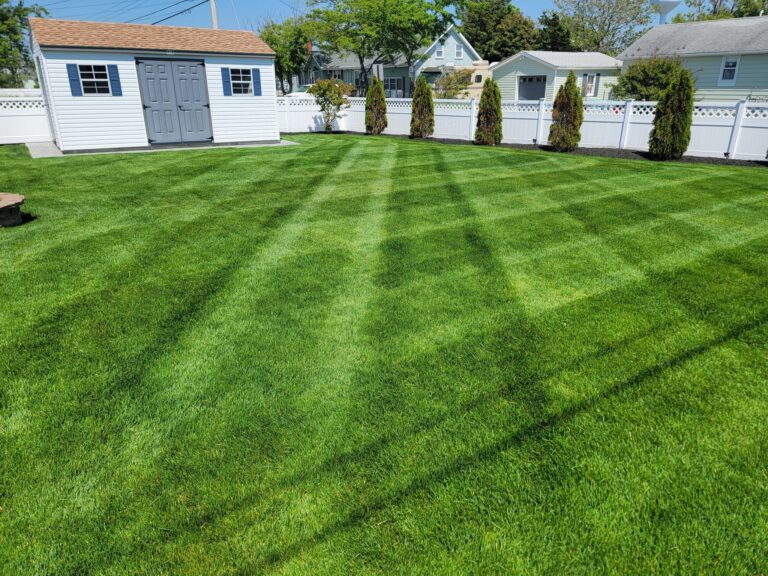
Sod laid on uneven ground, a patio set on a soft base, or beds built in a wet spot all fail the same way, from the ground up. We grade and prep a firm, even base set to the right fall, so whatever goes on top sits on ground that holds and sheds water instead of settling and pooling. For a new lawn we leave the surface smooth and true so the sod knits flat, with no dips to scalp or low spots to puddle, and for beds we set the grade so they drain instead of holding water against the roots.
For a hardscape install we cut the base to the depth and fall the build needs, so the crew laying the driveway or the Belgian block starts on ground that is already right. Getting the base correct first is what keeps the finished work from heaving, settling, or washing out a season later, which is the expensive way to find out the grade was wrong.
What Good Grading Does for a Property
Grading is the part of a landscape nobody sees and everything depends on, the shape of the ground that decides where the water goes. Get it right and the property drains, the lawn takes, the beds hold, and water stays away from the house, get it wrong and you fight standing water, washed-out beds, a soggy yard, and in the worst cases water working toward the foundation.
It is also the base for everything else, a new lawn or a patio is only as good as the ground under it, so the grade is where the value of the whole project is protected or lost. Down here, where the ground is sandy and low and sits close to the water table, grading is one of the most important and most overlooked parts of making a property work the way it should.